Six weeks into my journey through the breeding course at the Irish National Stud, Zania and I finally made it to Ireland after a long couple of flights. Welcomed by a major temperature change — and one of the stud staff — we were taken 45 minutes up the motorway to the stud in Kildare.
After being introduced to a great group of 23 other students from all around the world, we decided to break the ice by heading to the local pub — somewhere we have since spent plenty of time.
Over my time so far, I have worked in every yard on the farm. I started at Blanford and Black Cherry, where there were 25–30 yearlings spread across the yards. During that week I spent time assisting the farrier with trimming, parading yearlings for videos to send to owners, and changing more than 20 poultices over the course of the week.
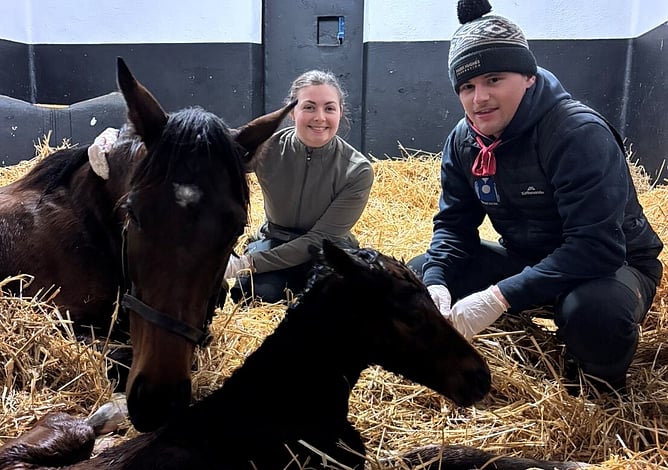
Following this, I moved onto night shift for the weekend, where I helped foal three mares over three nights. The first mare was a slight disaster due to an abnormal presentation, with the foal presenting all four legs at once. The foal became stuck, but thanks to the quick response of the foaling leader and the local vets, we were able to get the mare to the veterinary clinic within 30 minutes of the start of foaling, and she made a full recovery. Thankfully, the following two nights were much smoother, and I was able to assist with two very successful foalings.
Since then, I have also spent time at Murphy’s Yard, where mares are kept before being transferred to the foaling unit when close to foaling. This year, the stud has kept mares at Murphy’s for as long as possible to limit the risk of Clostridial disease. The yard was busy with moving mares, treatments, more poulticing, mucking out boxes, and feeding.
After my week at Murphy’s, it was finally time to head to the yard I had been most looking forward to — the stallions. Throughout my time in the breeding industry, I have found that the part of the job I enjoy most is working with stallions, so ever since my opportunity to come here was announced, this was the week I was most excited about.
I found the week incredibly enjoyable. I loved being back in the covering shed and working with stallions such as Lucky Vega, Phoenix of Spain, Nando Parrado, Shouldvebeenaring, new sire for 2026 Arizona Blaze, and, most notably, the retired top stallion Invincible Spirit. Returning to work with stallions quickly reminded me of the passion I have for this side of the industry, and the opportunity to work with them here has been a major highlight of the course so far.
Another standout experience was the opportunity to work at the Goffs February Sale. This mixed-age sale saw the Irish National Stud enter four yearlings and a broodmare. Over the two days I spent at the sale with two other students, we paraded the yearlings and mare on the first day before selling on the second.
I personally took two of these through the ring, and the sale proved a solid success for the stud, with all four yearlings sold. It was a fantastic experience — meeting new people, seeing how sales are conducted in Ireland, and having the opportunity to take horses through an internationally recognised sales ring.
I have also spent time at several other yards, including Sun Chariot, the foaling unit. Day-to-day duties here include turning out mares, mucking out boxes, caring for newborn foals, and monitoring mares one to two times per week.
During my time in this yard, I assisted with a further three foalings, including one where another student and I conducted the foaling with only verbal assistance from the yard manager. Thanks to my time here, I now feel confident in the foaling process and the steps required before, during, and after foaling.
Most recently, I spent the week at Kildare Yard, which houses mares and foals post-foaling. Daily tasks include turning mares and foals out, administering treatments, mucking out, feeding, and assisting with vet, teasing, and farrier work.
This yard has taught me a great deal about handling mares and foals, particularly the importance of early and consistent foal handling. One major difference I have noticed compared to New Zealand is that, because mares and foals are boxed overnight, the level of handling these foals receive is significantly higher.
As a result, foals quickly become accustomed to being handled, and those over 14 days old can be led in a head collar and walked beside their mother. This makes the process of turning mares and foals out both safe and efficient, and ensures that treatments and trimming can be carried out calmly and safely.
While the hands-on farm experience has been outstanding, I have also thoroughly enjoyed the classroom component. We have heard from top bloodstock agents, leading sales representatives, respected veterinarians, and many other influential figures within the thoroughbred industry.
I have recently completed my first assessment, where I selected a broodmare from the Goffs February Sale and prepared a report outlining a future plan for profitability with the mare.
The social side of Ireland has also been a highlight. The group on the course gets along extremely well, and I have built an incredible network of connections and friendships that I will keep for life. Between working together, attending race meetings, and spending time at the pub, it has been a very enjoyable six weeks.
Overall, the course has been incredible so far. The first six weeks have flown by, and I am excited to spend the next four months continuing to build relationships, learn, and further experience the thoroughbred industry here in the Northern Hemisphere.
I would like to conclude by sincerely thanking NZTBA and the Taylor family for the incredible opportunity to come to Ireland and experience the Northern Hemisphere thoroughbred industry. I hope I am representing you all well.
Cheers,
Joe.

